
Many rodents, including degus, refuse hay or eat too little of it. A lack of dietary fibre can contribute to digestive and dental problems. Hay provides fibre and encourages the sustained chewing that helps wear down the teeth. It is therefore an essential part of a degu’s daily diet.1 Before trying to encourage a degu to eat more hay, identify the reason for its reluctance.
The degu is overfed or its diet is unbalanced
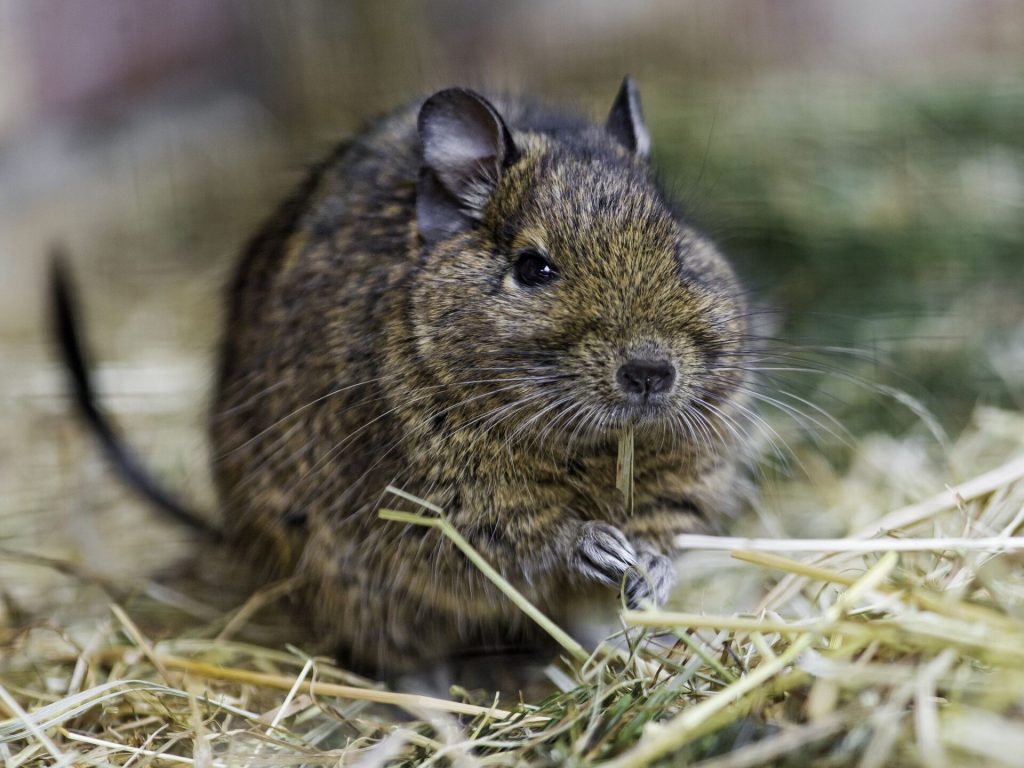
Degus may favour pellets or seeds over hay because these foods are richer and more attractive. In the wild, they select foods rich in protein and nitrogen when available, even though much of their diet consists of fibrous plant material.2, 3 Review the diet as a whole: choose foods that meet the species’ needs and measure concentrated foods to avoid overfeeding. The degu feeding guide explains this balance.
The hay is difficult to access
Some hay racks do not suit the way degus feed. These ground-dwelling animals enjoy digging and foraging. If they do not readily eat from a rack, try a tray filled with hay. Keeping all hay tightly confined can restrict natural foraging and food selection.
The hay offers little opportunity to forage
Presenting hay as part of an enrichment activity can encourage interest. Offer it in a cardboard roll or a suitable tunnel so that the degu can explore while feeding. Mixing in a few safe dried plants can also make hay more appealing. The aim is to encourage normal feeding behaviour, rather than to force the animal to eat.
The hay is unappealing or of poor quality
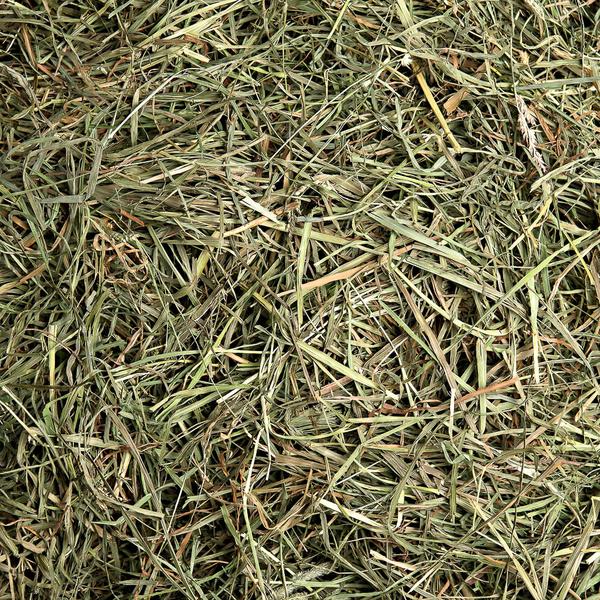
Poorly dried or soiled hay may be rejected. Choose clean, fibrous hay without excessive dust. It may be necessary to try several brands or types before finding one that your degus readily eat. The comparison of hay types can help you select a suitable option.
Sources
Jekl, V., Hauptman, K., & Knotek, Z. (2011). Diseases in pet degus: a retrospective study in 300 animals. Journal of Small Animal Practice, 52(2), 107–112. https://doi.org/10.1111/j.1748-5827.2010.01028.x
Edwards, M. S. (2009). Nutrition and behavior of degus (Octodon degus). Veterinary Clinics of North America: Exotic Animal Practice, 12(2), 237–253. https://pubmed.ncbi.nlm.nih.gov/19341951/
Meserve, P. L., et al. (1983). Feeding ecology of two Chilean caviomorphs in a central Mediterranean savanna. Journal of Mammalogy, 64(2), 322–325. https://doi.org/10.2307/1380568